BIM for Façade Design in India – Revit & beyond — how BIM transforms façade engineering

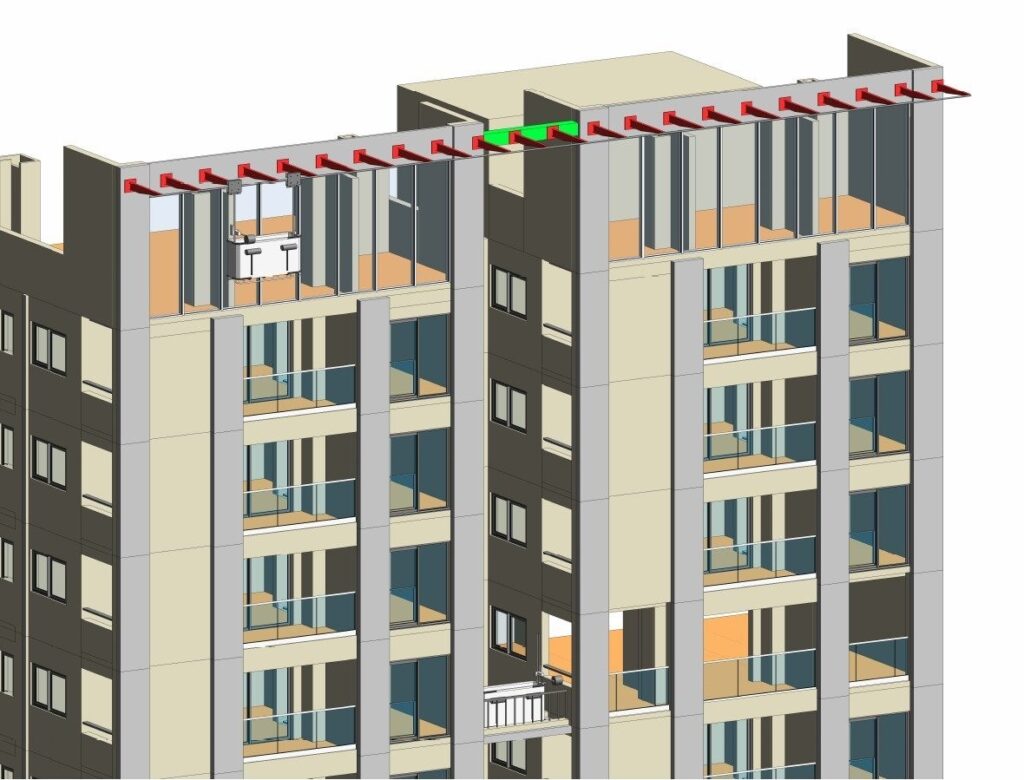
Building Information Modelling (BIM) has transformed how buildings are designed, coordinated, and built. For façade engineering, BIM offers powerful advantages — from clash detection and performance simulation to construction sequencing and as-built documentation.

1. What Is BIM for Façade Design?

BIM is not just 3D modelling — it is a process of creating and managing a digital information model of the building’s façade throughout its lifecycle. A well-executed façade BIM model contains geometry, material properties, performance data, specification references, and construction sequencing information.

🔑  BIM vs CAD — Key Difference

Traditional CAD drawings show what a façade looks like. A BIM model shows what a façade is — each element carries information about material, weight, thermal properties, cost, and installation sequence. This information drives quantity takeoff, energy simulation, clash detection, and facility management.

2. BIM Level of Development (LOD) for Façade

LOD LevelWhat Is ModelledTypical Use
LOD 100Façade massing — area and orientation onlyEarly energy modelling; massing studies
LOD 200System types and approximate dimensions; no joint detailsSchematic design; cost estimation; early coordination
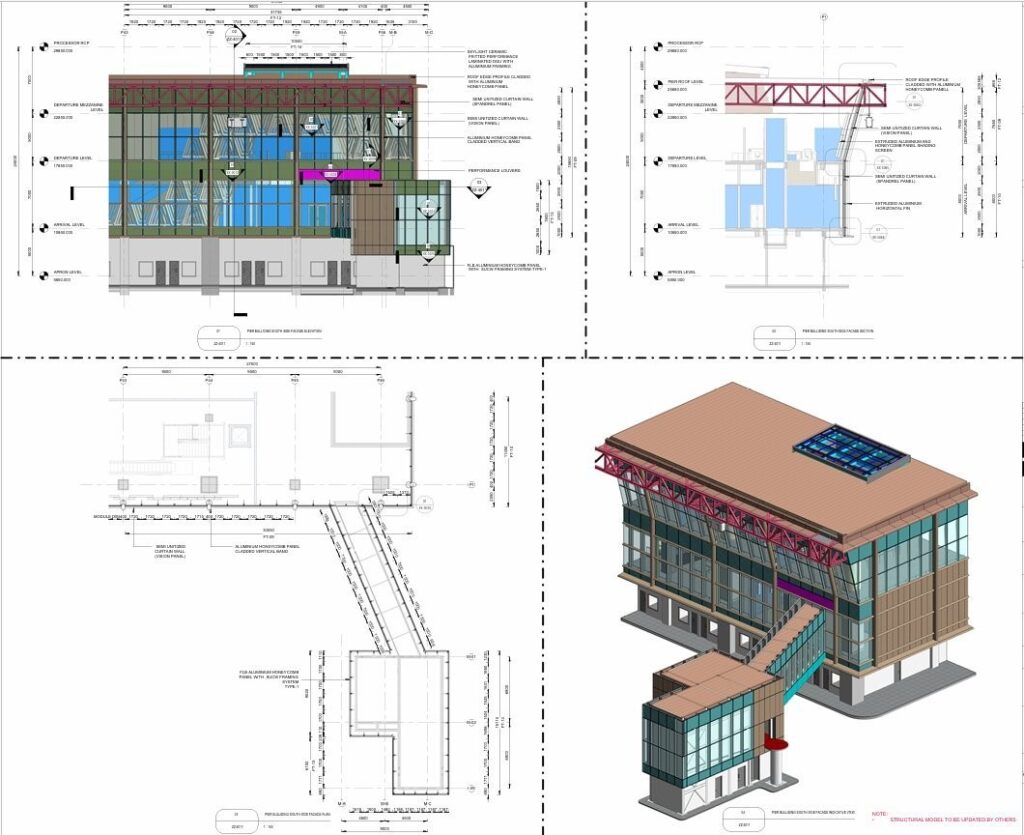
LOD 300Precise geometry including panels, mullions, joints, interfaces; linked to specificationDesign development; clash detection; tender documentation
LOD 350Construction-ready model including fixings, anchors, tolerance allowancesConstruction coordination; shop drawing basis
LOD 400Fabrication model — exact shop drawing geometryFabrication; CNC cutting files for aluminium
LOD 500As-built model reflecting actual installed conditionFacility management; future maintenance reference

3. Software Used in Façade BIM

SoftwarePrimary Use in FaçadeWidely Used in India?
Autodesk Revit3D façade modelling, LOD 300–350 coordinationYes — industry standard
Rhino + GrasshopperParametric geometry; complex curved facadesGrowing — specialist firms
Tekla StructuresStructural façade steel and complex bracket designModerate — structural firms
NavisworksClash detection and multi-discipline coordinationYes — common on large projects
IES VE / EnergyPlusThermal simulation using BIM geometryModerate — energy consultants
SJ MEPLAGlass structural analysis — point fixings, spider glazingSpecialist use only

4. Key Benefits of BIM for Indian Façade Projects

4.1 Clash Detection

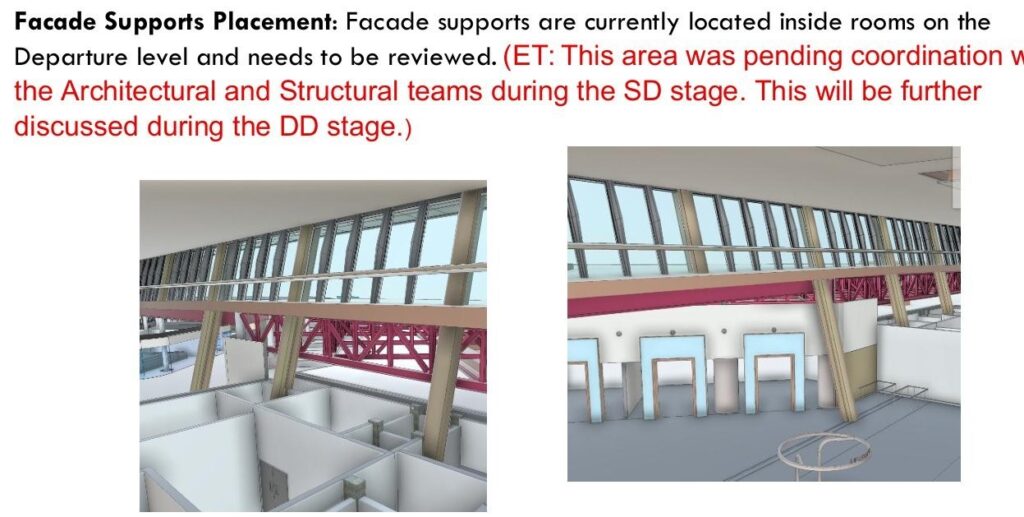
BIM clash detection in Navisworks or Revit identifies conflicts between the façade and structure, MEP services, or interior fit-out digitally before construction — avoiding costly on-site changes.

4.2 Quantity Takeoff and Cost Estimation

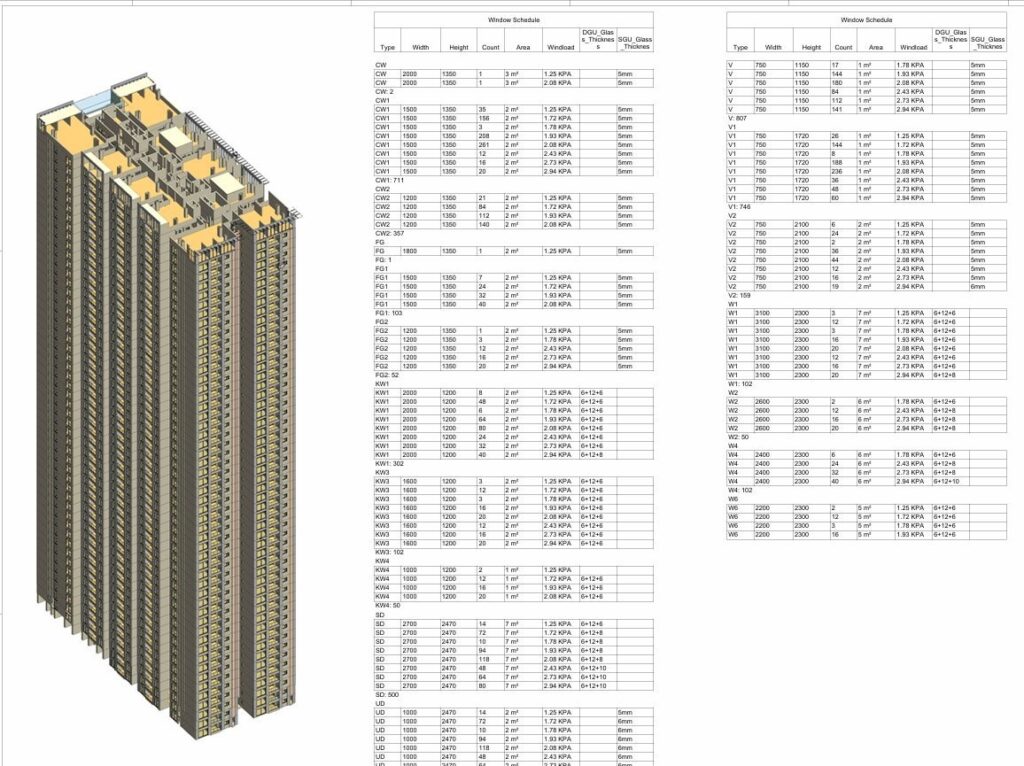
A LOD 300 façade BIM model can generate accurate Bills of Quantities directly — reducing estimation errors and providing reliable budget data to developers.

4.3 Parametric Design for Complex Geometry

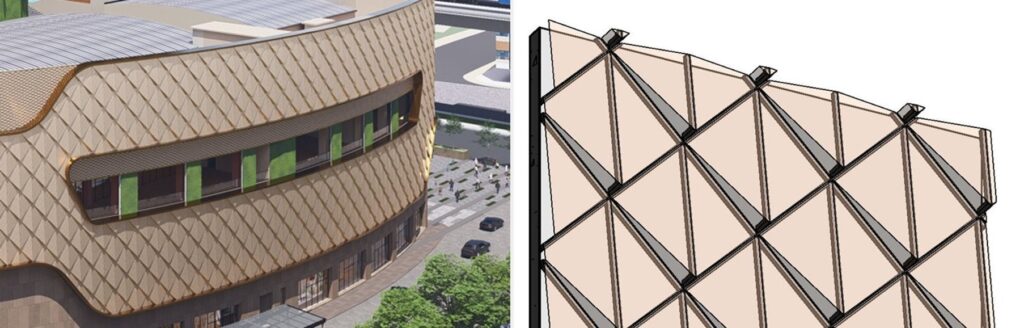
For non-standard geometries (double-curved surfaces, parametric patterns, complex angles), Grasshopper scripting in Rhino allows systematic generation of hundreds of unique panel geometries — impossible with traditional CAD.

4.4 Performance Simulation

BIM geometry can be exported directly to energy simulation tools (IES VE, DesignBuilder) or CFD software for wind analysis — testing the performance impact of design decisions before commitment.

4.5 Construction Sequencing (4D BIM)

4D BIM (3D model + time) allows the façade engineer and contractor to visualise and plan the installation sequence — critical for unitized curtain wall systems where crane logistics and floor-by-floor progression must be carefully coordinated.

5. BIM Adoption in India — Current State

~45%

BIM Adoption (Large Projects)

of Indian large projects use BIM

5-10%

Cost Savings

construction cost reduction via BIM

Up to 40%

Error Reduction

fewer RFIs with BIM coordination

India’s BIM adoption is growing rapidly, driven by large developers (DLF, Lodha, Brigade, Prestige), international architects, and government infrastructure projects. The Ministry of Housing and Urban Affairs has indicated BIM mandates for government projects are under consideration.

6. Challenges in BIM Implementation in India

Despite growing awareness, BIM adoption on Indian façade projects faces significant structural and cultural barriers. Understanding these challenges is the first step to addressing them.

⚠️  Key Challenges in Indian BIM Adoption

1. Uneven BIM Readiness Across the Design Team

BIM is only as effective as the weakest link in the project team. On many Indian projects, the architect may be working in Revit while the structural consultant uses AutoCAD, the MEP consultant uses a different platform, and the façade specialist operates in yet another environment. When disciplines cannot share a federated model, the core benefit of BIM — multi-discipline coordination — is lost. Full BIM requires a contractual and cultural commitment from every consultant on the project.

2. Shortage of Skilled BIM Professionals

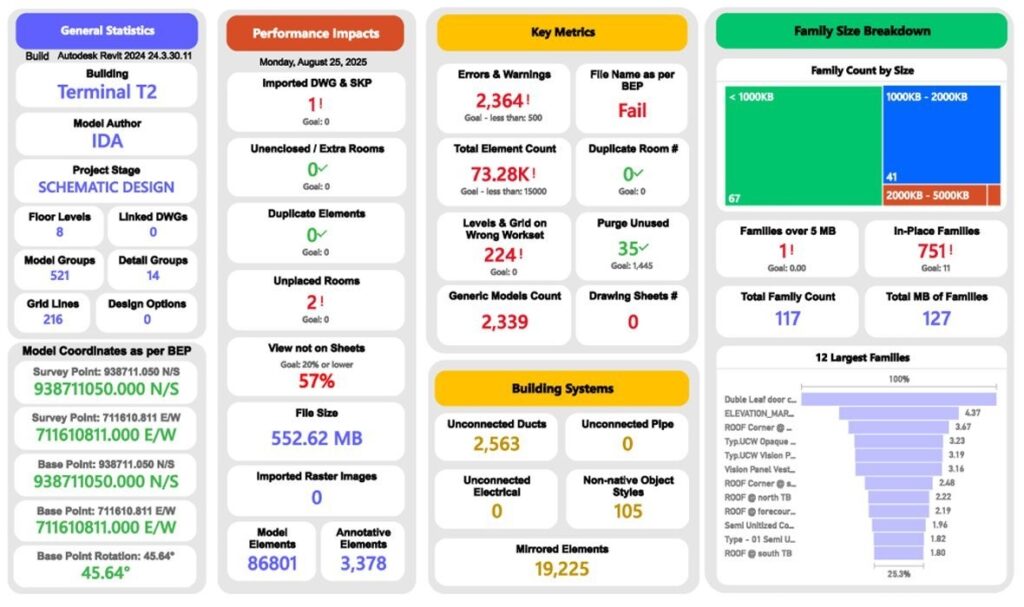
India has a large pool of CAD-trained draughtsmen but a limited number of professionals who can author, manage, and coordinate a BIM model at LOD 300 or above. BIM management — setting up project templates, managing shared parameters, coordinating clash detection workflows, and producing BIM execution plans — requires a different skill set that architecture and engineering colleges are only beginning to teach systematically. Firms that attempt BIM without adequate trained staff often produce models that are geometry-only, missing the information richness that makes BIM valuable.

3. BIM Perceived as Cost Rather Than Investment

Many developers and project managers in India view BIM as an additional fee line — an overhead that adds cost without an obvious, immediate return. The value of BIM (fewer RFIs, reduced rework, accurate quantities, faster approvals) accrues over the construction phase, not at the design stage when the fee is paid. Until clients experience a BIM-coordinated project versus a non-BIM project firsthand, the investment case remains abstract. Education and demonstrated project outcomes are the primary tools to shift this perception.

4. Contractors Without BIM Capability

Even when a detailed BIM model is delivered at tender, most Indian façade contractors — particularly tier-2 and tier-3 firms — do not have the in-house capability to read, interrogate, or build upon a BIM model. Shop drawings are still typically prepared in AutoCAD. Without contractor-side BIM adoption, the model’s value for construction coordination, fabrication, and installation sequencing is not realised. Bridging this gap requires either contractor up-skilling or specialist BIM-to-fabrication services provided by the façade consultant.

The path forward: Mandating BIM in project briefs, linking consultant fees to model deliverables, and requiring BIM-capable contractors at tender are the most direct levers available to developers and project managers who want to capture BIM’s full value on Indian projects.

💡  EnvelopeTechnik’s BIM Capability

EnvelopeTechnik delivers BIM-enabled façade design from LOD 200 through to LOD 400. Our team uses Revit for coordination, Rhino+Grasshopper for complex geometry, and SJ MEPLA for glass structural analysis. All projects are delivered with BIM models that integrate into the client’s project BIM environment.  contact@envelopetechnik.com  |  +91 99129 88116  |  www.envelopetechnik.com